
The Essential 3: Why You Must Build a Safety Net Before You Invest
Home > The Essential 3: Why You Must Build a Safety Net Before You Invest
Home > The Essential 3: Why You Must Build a Safety Net Before You Invest
👤 Ketan Jogalekar
It is tempting to jump straight into the stock market the moment you have some extra cash. We all want to see our money grow as quickly as possible. However, investing without a safety net is like building a beautiful house on a foundation of sand. One storm can wash it all away.
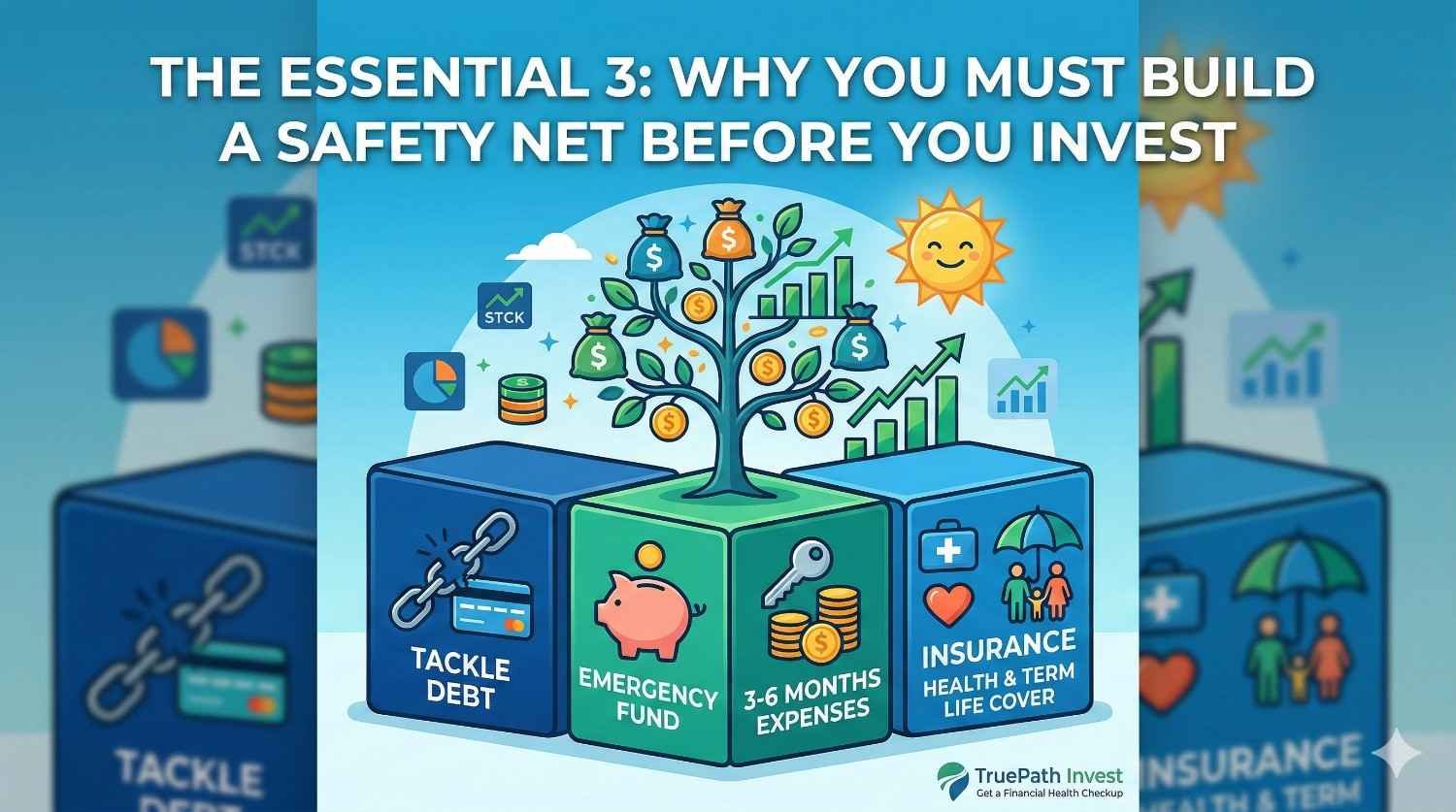
Before you pick your first mutual fund, there are three essential steps you must take to protect yourself and your family. We call these the Essential 3.
Not all debt is bad, but high-interest debt is a wealth-killer. If you have a credit card balance charging you 30% or 40% interest annually, no investment in the world can consistently beat that.
If you invest in a fund that returns 12% while you are paying 36% on a loan, you are effectively losing 24% of your money every year.
The Strategy: Focus on paying off high-interest personal loans and credit card debts before you start investing heavily. Think of debt repayment as a guaranteed, risk-free return on your money.
Life is full of "what-ifs." What if your car needs a major repair? What if you face a medical emergency? What if you lose your job?
An emergency fund is a pool of money set aside specifically for these moments. Without it, you might be forced to sell your long-term investments at a loss just to cover a short-term crisis.
How much? Aim for 3 to 6 months of your essential living expenses.
Where to keep it? This money should be safe and accessible. A high-interest savings account or a Liquid Mutual Fund is ideal. These funds allow you to earn a bit more than a standard bank account while ensuring you can withdraw the money within 24 hours.
Insurance is often confused with investing, but they serve completely different purposes. Insurance is not meant to make you money; it is meant to prevent you from losing it.
There are two types of insurance every investor needs:
Health Insurance: Medical costs are rising faster than general inflation. A single hospital stay can wipe out years of savings. Ensure you have a comprehensive health policy for yourself and your family that is independent of your employer-provided cover.
Term Life Insurance: If you have anyone depending on your income, life insurance is non-negotiable. Stick to Term Insurance. It is pure protection with no "investment" component, making it much more affordable. It provides a large payout to your family if something happens to you, ensuring their financial goals stay on track.
Think of these three steps as your "financial shock absorbers." When the market goes down or life throws a curveball, you won't need to panic. You won't have to stop your SIPs or withdraw your retirement fund early because your Essential 3 are already in place.
A successful investor is a prepared investor. This week, take a look at your finances. Do you have a credit card balance? Do you have six months of expenses in a safe place? Is your life and health insurance adequate? If the answer is no, make these your priority before you look for the next "hot" fund.
Next week, we move into the psychology of investing: Understanding Risk: How to Define Your Personal Risk Profile.
Unsure if your current insurance or emergency fund is enough?
At TruePath Invest, we don't just sell funds; we help you build a resilient financial life. We can help you calculate your ideal emergency fund and review your insurance needs.
Get a Financial Health Checkup with TruePath